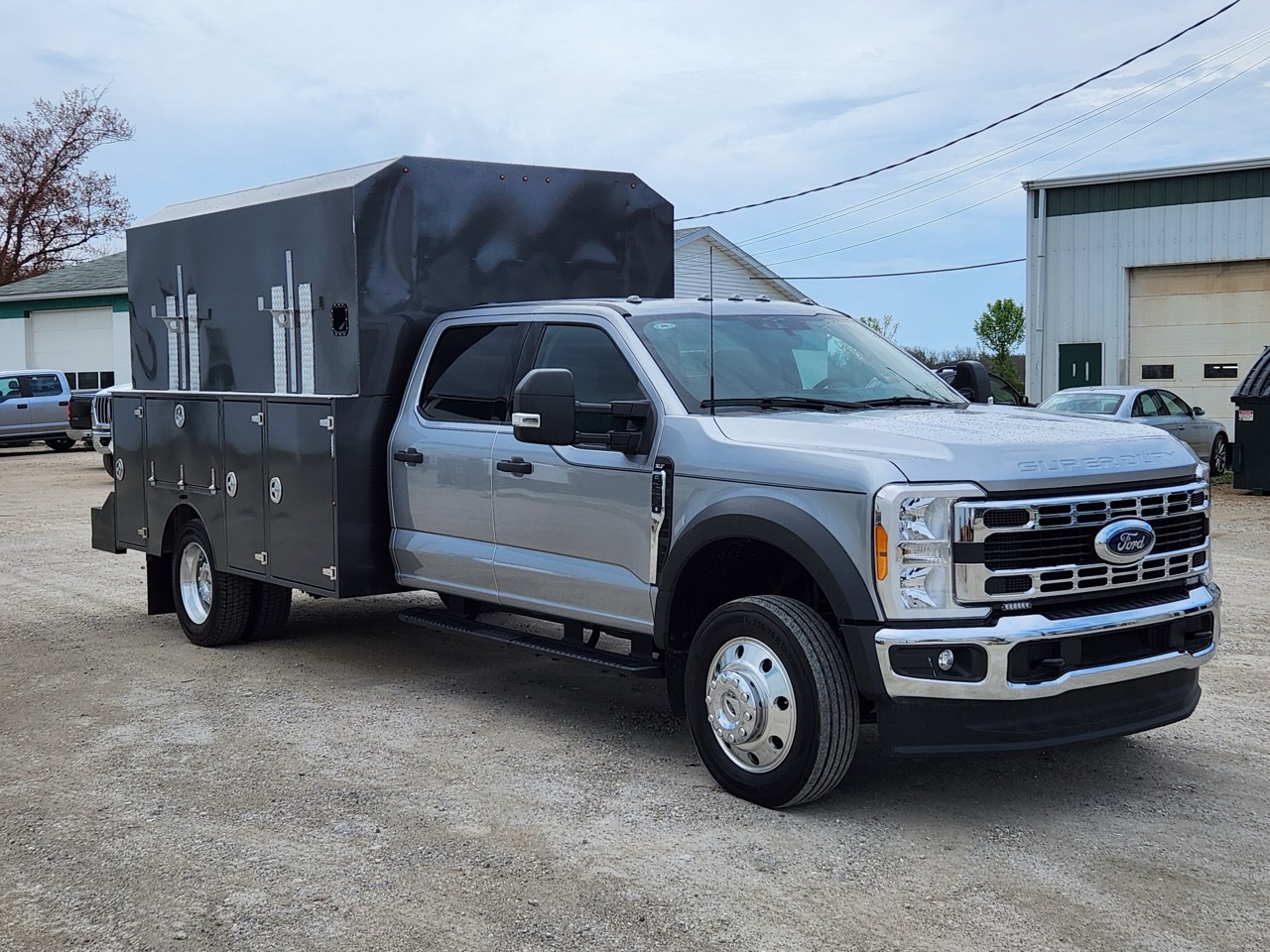
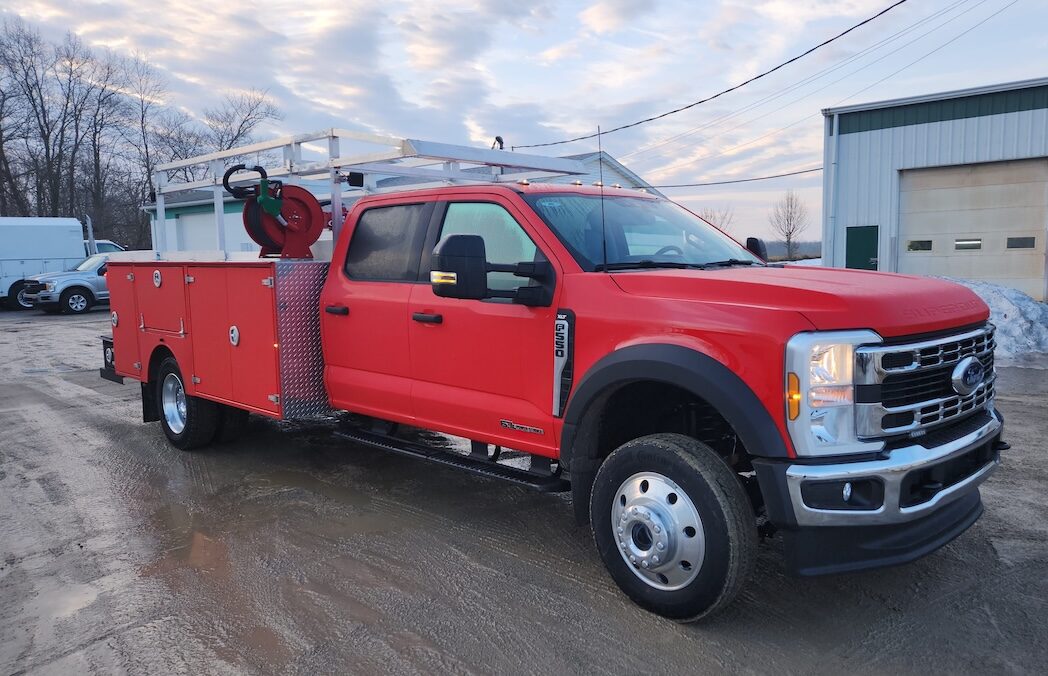
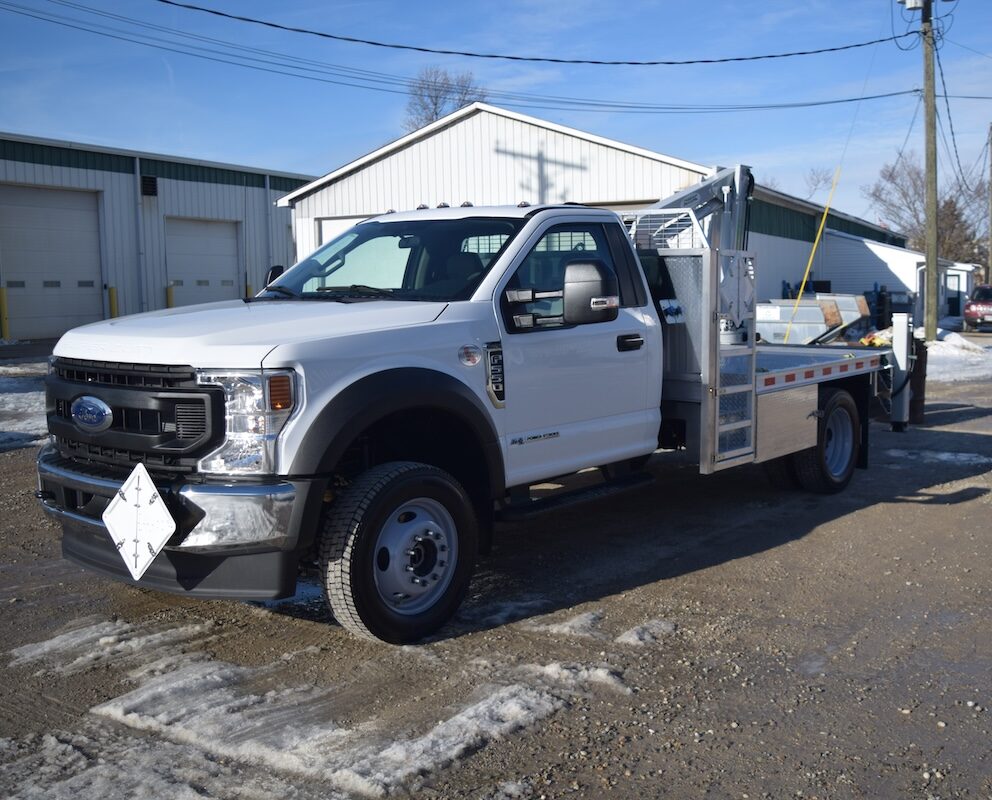
A service truck is more than a piece of equipment; it also represents your company every time it pulls onto a jobsite. A rusted, worn, or poorly maintained truck body can negatively affect how customers perceive your business. Whether you are servicing industrial accounts, utility customers, municipalities, or residential clients, the appearance of your equipment reflects on your professionalism, attention to detail, and overall brand.
The body you choose also impacts payload, fuel efficiency, storage organization, crane performance, corrosion resistance, and how much downtime your crews experience. A low upfront price may look attractive initially, though if the body rusts, flexes, leaks, or requires frequent repairs, you’ll pay for that decision repeatedly.
When comparing service truck body suppliers, focus on the factors that determine long-term durability and value.
Which Brands Make the Most Durable Aluminum Service Truck Bodies?
Several manufacturers build aluminum service truck bodies for commercial fleets in the United States. When comparing brands, durability depends on far more than the material itself.
Look for manufacturers that emphasize:
- Proven aluminum construction
- Reinforced cabinet design
- Cross-member strength
- Crane-body integration
- Corrosion resistance
- Long-term warranty coverage
- Low total cost of ownership
JOMAC has specialized in aluminum truck body manufacturing since 1988, making us one of the longest-standing aluminum truck body manufacturers in North America. Our bodies are engineered for demanding commercial applications and backed by a Lifetime Structural Warranty.
Start With the Material
Material selection should be one of the first considerations when evaluating service truck body suppliers.
Steel has long been used in work trucks, though it adds weight and is susceptible to corrosion over time. For fleets operating in rain, snow, mud, road salt, and other harsh environments, rust can significantly reduce the service life of a truck body.
Aluminum provides a strong alternative. A well-engineered aluminum service body reduces weight, resists corrosion, and helps support years of reliable service.
If you’re searching for the most durable aluminum service truck bodies, don’t stop at the word “aluminum.” Ask how the body is engineered, reinforced, and assembled. Long-term durability depends as much on construction methods as it does on the material itself.
Look Closely at Cabinet Construction
Cabinets experience constant use and abuse throughout the workday. Weak cabinet construction often leads to alignment issues, premature wear, and ongoing maintenance concerns.
Your service truck body supplier should be able to clearly explain:
- Wall thickness
- Reinforcement methods
- Hinges and hardware
- Latches and seals
- Shelf design
- Drawer systems
- Compartment configuration
Double-thickness cabinet walls provide additional rigidity in high-stress areas, helping doors remain aligned and compartments maintain their integrity over years of daily use.
Storage design matters as well. Well-organized compartments improve efficiency by helping technicians quickly access tools and equipment. If crews spend valuable time searching through poorly designed storage areas, the body is not supporting productivity.
Ask How the Body Handles Load and Stress
A service truck body carries much more than tools. Depending on the application, it may support cranes, outriggers, compressors, welders, reels, tanks, heavy drawers, and other mounted equipment.
What you see on the outside is only part of the structure.
Cross-member design, substructure support, and reinforcement all influence how the body handles vibration, payload, and repeated stress over time. Cross-member spacing, size, and reinforcement play a significant role in maintaining structural integrity throughout years of service.
When comparing suppliers, ask how the body is designed to manage these forces. A clear answer demonstrates experience with real-world service applications. A vague answer may indicate the body was not fully engineered for demanding field conditions.
Evaluate Crane-Body Reinforcement
For crane-equipped service trucks, reinforcement should be engineered into the body from the beginning rather than added later.
The supplier should consider:
- Crane capacity
- Outrigger placement
- Chassis specifications
- Load distribution
- Structural stress points
- Safe operation requirements
Proper integration between the crane, outriggers, and body helps distribute loads more effectively and supports long-term durability. A crane should never feel like an afterthought in the design process.
Do Not Ignore Corrosion Resistance
Corrosion is more than a cosmetic issue. It can weaken compartments, damage doors and hardware, increase maintenance costs, and shorten the useful life of the body.
One of aluminum’s greatest advantages is its resistance to rust. For many fleets, this translates into fewer repairs, lower maintenance costs, and a longer-lasting truck body.
However, corrosion resistance depends on more than material selection. Ask suppliers about:
- Fasteners
- Seams
- Drainage design
- Mounting points
- Water management
- Protective finishes
A durable body should be engineered to withstand the environments your crews face every day.
Compare the Warranty Carefully
A warranty reveals how much confidence a manufacturer has in its product.
Some warranties appear impressive until you review the details. Others provide limited protection for the structural components that matter most.
Ask:
- What does the warranty cover?
- How long does coverage last?
- What structural components are included?
- How is support handled if issues arise?
Manufacturers that offer Limited Lifetime Structural Warranties demonstrate confidence in their engineering and construction methods.
The warranty should support a broader foundation of quality, including strong materials, proven design, and dependable service after the sale.
Think About Total Cost of Ownership
The least expensive body to purchase is not always the least expensive body to own.
A heavier body may reduce payload. A corrosion-prone body may require earlier repairs. Weak cabinet construction can reduce productivity. Poor structural design can lead to costly downtime.
Total cost of ownership includes:
- Purchase price
- Maintenance costs
- Repairs
- Fuel consumption
- Productivity
- Downtime
- Replacement cycles
When viewed through that lens, durability becomes a business decision rather than simply a product feature.
Since 1988, JOMAC has focused exclusively on building Powerfully Light aluminum truck bodies designed for long-term performance. Our approach combines weight savings, corrosion resistance, structural strength, and application-specific engineering to help fleets maximize value over the life of the vehicle.
Choose a Supplier That Builds Around Your Work
When comparing service truck body suppliers, look beyond the brochure.
Evaluate material selection, cabinet construction, cross-member design, crane reinforcement, corrosion resistance, warranty coverage, and total cost of ownership. These factors separate a basic truck body from a long-term investment in productivity and reliability.
If you’re evaluating options for a mechanics truck body or service truck body, JOMAC can help you compare designs, review application requirements, and build a solution engineered around the way your crews work.
Get a quote today and discover why fleets across North America trust JOMAC’s Powerfully Light aluminum truck bodies.