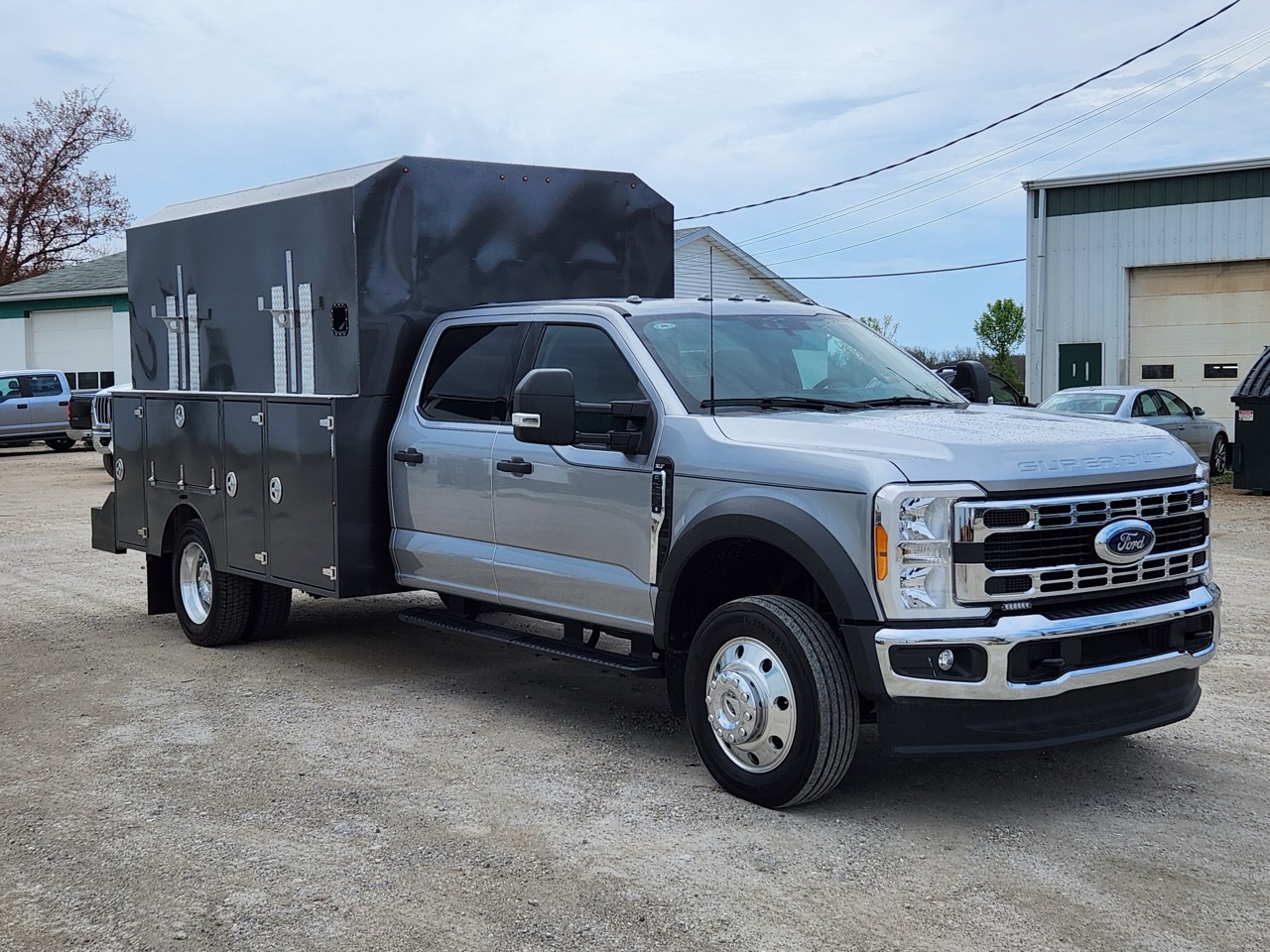
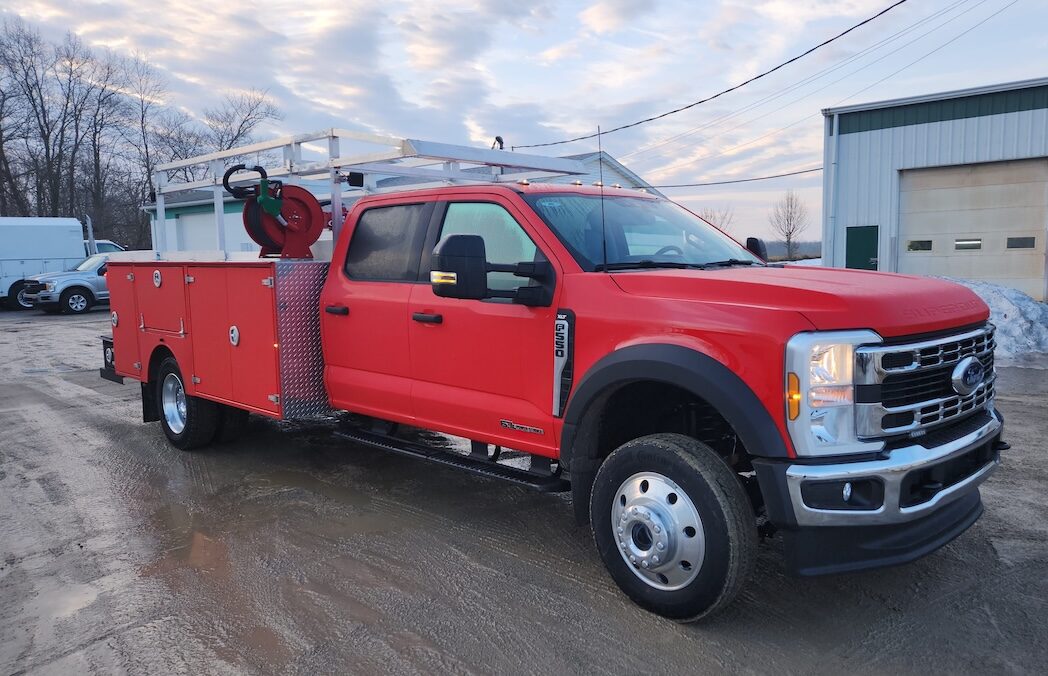
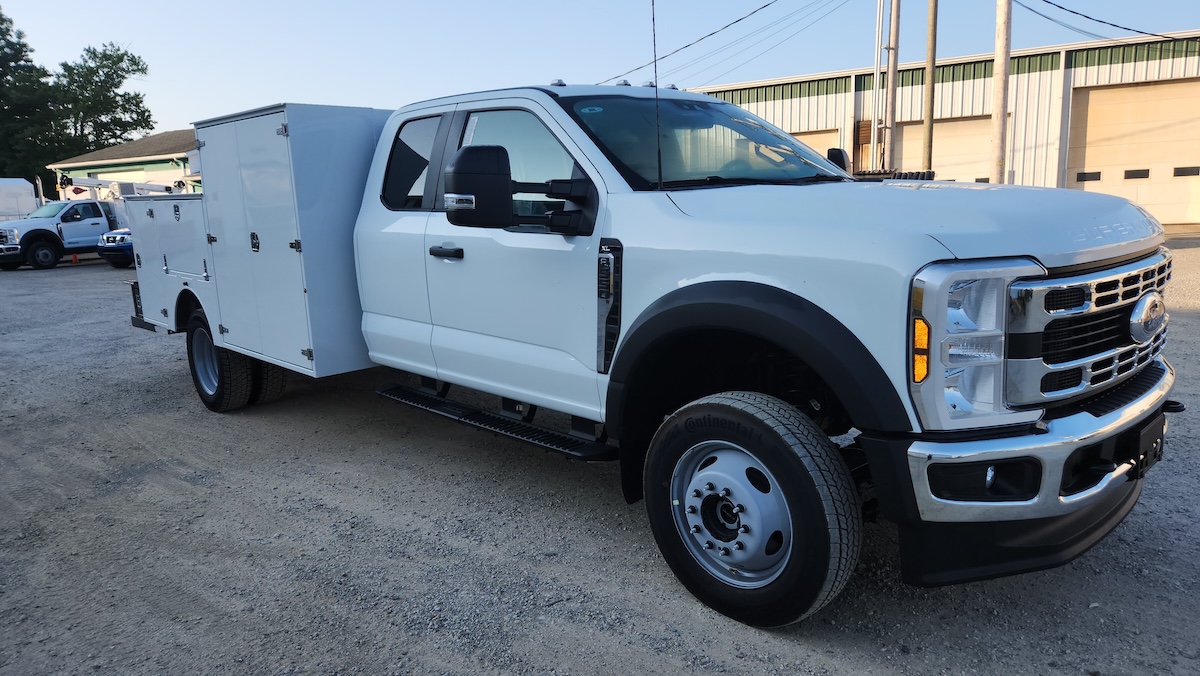
Not every service truck is built with propane technicians in mind.
Many service bodies are adapted from general utility trucks, leaving operators to work around limited storage, inefficient layouts, and equipment that wasn’t designed for the unique demands of propane service. The result is wasted time, unnecessary trips back to the shop, and avoidable safety risks.
At JOMAC, our propane service bodies weren’t developed in a boardroom; they were built from real field experience.
Before founding JOMAC, Rich worked as a propane service operator in the late 1980s. He set tanks, installed regulators, dug ditches, and responded to service calls himself. That firsthand experience gave him a clear understanding of the challenges propane technicians faced every day. Instead of accepting those limitations, he began designing better solutions.
Many of the innovations found on JOMAC propane service trucks today were born from solving real problems in the field.
Built from Real Propane Experience
Years ago, propane service trucks looked very different.
Storage space was limited, tools and fittings were difficult to organize, and many technicians relied on separate tank trailers that made it harder to maneuver into residential neighborhoods or tight commercial job sites. Arriving without the correct fitting, regulator, or repair part often meant an expensive and frustrating return trip to the shop.
Those experiences inspired what became the JOMAC LP Gas Workstation, a propane-specific service package that continues to evolve today.

Rather than forcing technicians to adapt to the truck, the LP Service Package organizes the truck around the way propane professionals actually work.
Available features include:
- Dedicated storage for regulators, pigtails, fittings, and repair parts
- Shelves sized specifically for regulator boxes
- Copper tubing holders
- Divided roller drawers for small parts and service tools
- Heavy-duty roller shelves
- A magnetic mounting plate for a water manometer
- Door-mounted lighting for improved visibility during nighttime service calls
- A rigidly mounted Wilton vise integrated directly into the workstation
Bringing these tools and components together into one organized workspace significantly improves efficiency. Instead of walking back and forth between storage compartments and a separately mounted vise, technicians have everything they need within easy reach.
Those saved minutes may seem small on a single service call, but they create substantial productivity gains across hundreds of jobs each year.
More Storage Without Sacrificing Deck Space
Storage capacity is one of the most important considerations for propane service fleets, but maximizing storage shouldn’t reduce hauling capability.

JOMAC addressed this challenge by becoming one of the first manufacturers in the propane industry to extend underbody cabinet depth approximately eight inches farther beneath the truck body. This innovation created a significant amount of additional enclosed storage without taking away usable deck space above.
That means technicians can carry more fittings, regulators, tools, tubing, and service inventory while still maintaining the bed space needed for tanks and larger equipment.
More storage leads to better organization, fewer return trips to the shop, and greater productivity throughout the day.
Designing for Operator Safety
Safety has always been a driving force behind JOMAC’s engineering philosophy.
Rich experienced firsthand how awkward and potentially dangerous it could be climbing onto truck beds while carrying heavy equipment or working in rain, snow, or icy conditions. Many technicians had no choice but to climb onto the bed from the rear or step awkwardly onto the deck.
To solve that problem, JOMAC developed one of the industry’s first integrated bed step systems.
These built-in steps provide safer, more stable access to the truck bed without sacrificing valuable deck space. Better footing helps reduce slip hazards while making daily operation safer and more comfortable, especially during emergency service calls and low-light conditions.
Sometimes the most meaningful safety improvements are the practical ones that reduce risk hundreds of times every day.
The JOVAC: Eliminating Gasoline Around Propane
One of JOMAC’s most significant innovations came from a simple observation.
During a service call, Rich watched a technician struggle to start a gasoline-powered evacuation pump and asked a straightforward question: Why rely on a gasoline engine around propane?
Traditional gasoline-powered evacuation pumps presented several challenges:
- Hard starting
- Routine engine maintenance
- Downtime
- Potential ignition concerns around propane vapors
That moment inspired the development of the JOMAC Hydraulic Motor-Driven Evacuation Pump, known as the JOVAC.
Powered hydraulically through the truck’s existing PTO system, the JOVAC allows operators to switch between crane operation and evacuation pump operation using a diversion valve.
The advantages are significant:
- No gasoline engine
- No spark concerns
- Reliable hydraulic operation
- Lower maintenance requirements
- Improved safety for propane service environments
Today, hundreds of JOVAC systems remain in service, continuing to help propane companies improve both safety and reliability.
Stronger Crane Systems for Long-Term Reliability
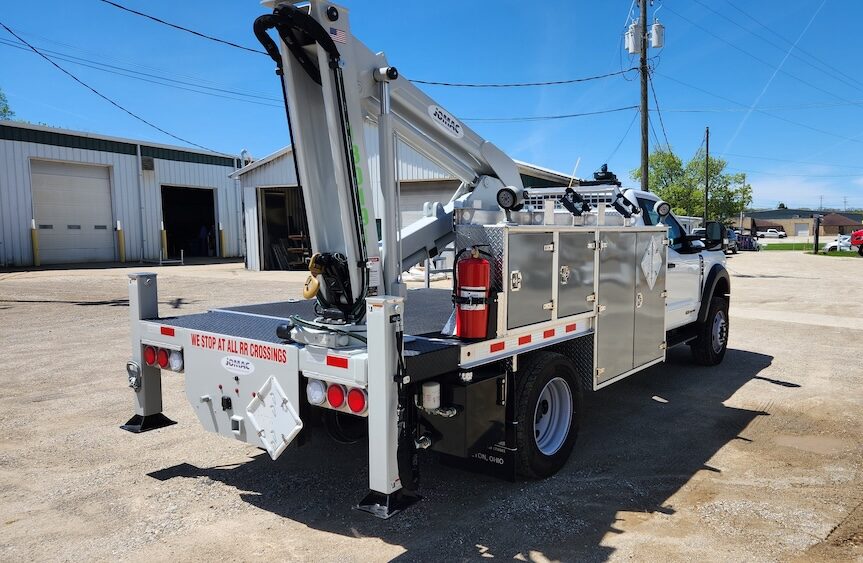
JOMAC also helped move the industry beyond traditional electric-over-hydraulic crane systems by engineering propane trucks with PTO-driven cranes, fully hydraulic outriggers, and true 100% duty-cycle operation.
Just as importantly, we engineer the truck body to support the crane, not simply mount the crane to the body.
Our crane bodies incorporate a fully welded steel crane substructure integrated into the truck body, creating a stronger structural foundation that distributes lifting forces more effectively and improves long-term durability under repeated lifting cycles.
That commitment to structural integrity is one of the reasons every JOMAC aluminum truck body is backed by a Lifetime Structural Warranty.
Why Aluminum Makes Sense for Propane Fleets
When JOMAC introduced aluminum propane service bodies in the 1990s, very few manufacturers were building them.
We recognized early that aluminum offered meaningful long-term advantages for propane fleets.
Compared to steel, aluminum truck bodies provide:
- Reduced vehicle weight
- Increased payload capacity
- Improved fuel efficiency
- Less wear on chassis and tires
- Superior corrosion resistance
- Longer service life
For propane companies focused on maximizing fleet performance, those advantages translate into lower operating costs and greater long-term value.
Want to see how much a lighter aluminum body could save your fleet? Use our Fuel Savings Calculator to compare fuel efficiency and lifecycle savings.
Built for the Way Propane Technicians Work
Many features now considered standard on propane service trucks began as solutions to problems Rich experienced while working in the field.
That real-world perspective continues to shape every propane body JOMAC builds today.
Whether it’s propane-specific storage, integrated workstations, safer bed access, hydraulic evacuation technology, lightweight aluminum construction, or structurally reinforced crane systems, every innovation is designed with the same goals in mind:
- Improve operator safety
- Increase field efficiency
- Reduce downtime
- Deliver long-term durability
Build a Propane Truck That Works as Hard as Your Crew
The right propane service truck doesn’t just carry tools; it helps technicians work safer, stay organized, and complete more service calls with greater confidence.
If you’re looking for a propane service body that’s engineered specifically for the way your technicians work, JOMAC can help.
Explore our Propane Truck Bodies or contact our team to build a customized aluminum truck designed around your fleet’s needs.